Keep anxiety skills organized.
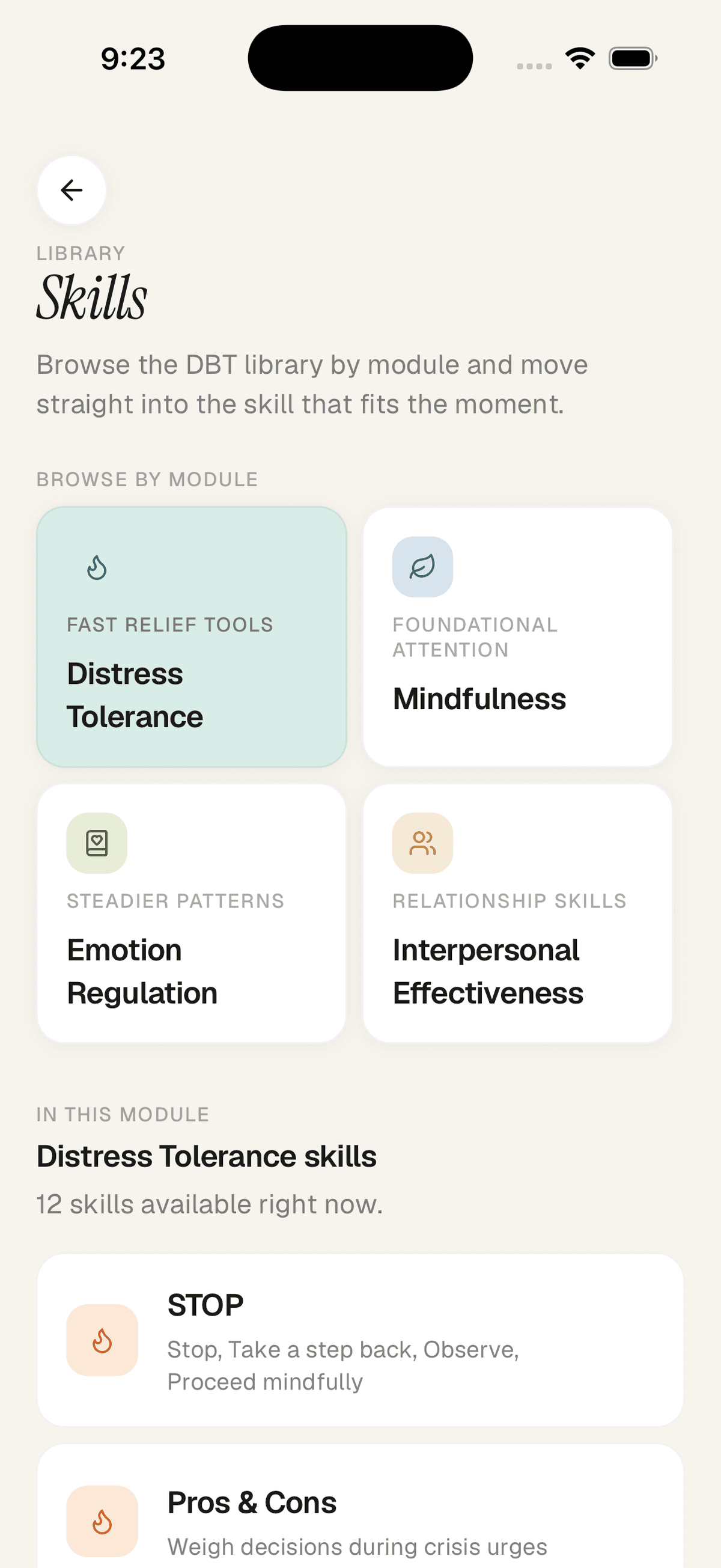
TIPP, STOP, Wise Mind, and Check the Facts are easier to use when they are visible, named, and ready for the moment you need them.
Use Check the FactsDBT skills for anxiety
WithMarsha helps you slow the spiral, choose a DBT skill, and practice a more deliberate next step without treating anxiety as a personal failure.


Educational DBT support for iOS and Android. Not therapy, diagnosis, or crisis care.
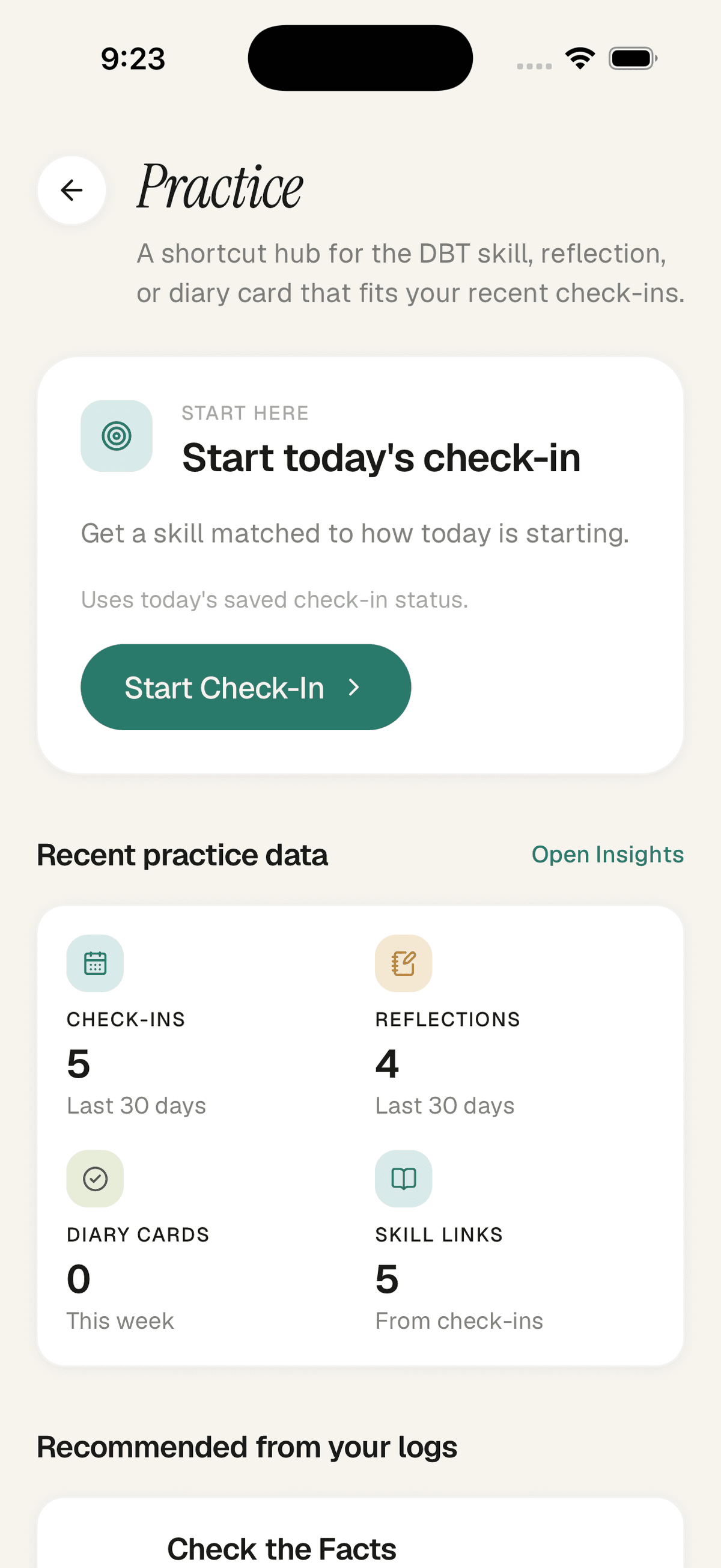
Open a useful DBT prompt when you need one, without hunting through a worksheet.
Use guided exercises to turn a skill into a response you can actually remember.
Use reflections and diary-card practice to notice what keeps showing up over time.
A worksheet can be a great place to learn. The difficult part is remembering what you learned when your body is activated, a conversation is going sideways, or the day is already too full. WithMarsha is built to shorten that gap.
Instead of asking you to solve everything at once, it gives you a place to name the moment, choose a skill, and return to what happened later with more context. That is a practice loop, not a promise of instant relief.
Notice what is happening
Start with the emotion, urge, situation, or conversation in front of you. You do not need a perfect explanation to begin.
Choose one usable response
Open a named DBT skill, guided prompt, or practice tool. A small next step is more useful than trying to remember an entire module.
Return with curiosity
Use a diary-card reflection to notice what helped, what did not, and what you want to discuss with your therapist or revisit later.
Built for the moment after “what now?”
TIPP when your body is highly activated
STOP before an anxious impulse takes over
Wise Mind before a big decision
Check the Facts when fear becomes a story
Daily practice to make skills easier to recall
Clear educational boundaries around when to seek care
A product, not a promise
Start with an in-the-moment skill prompt. It can create enough space to choose what comes next with more intention.
Try the TIPP timerTIPP, STOP, Wise Mind, and Check the Facts are easier to use when they are visible, named, and ready for the moment you need them.
Use Check the Facts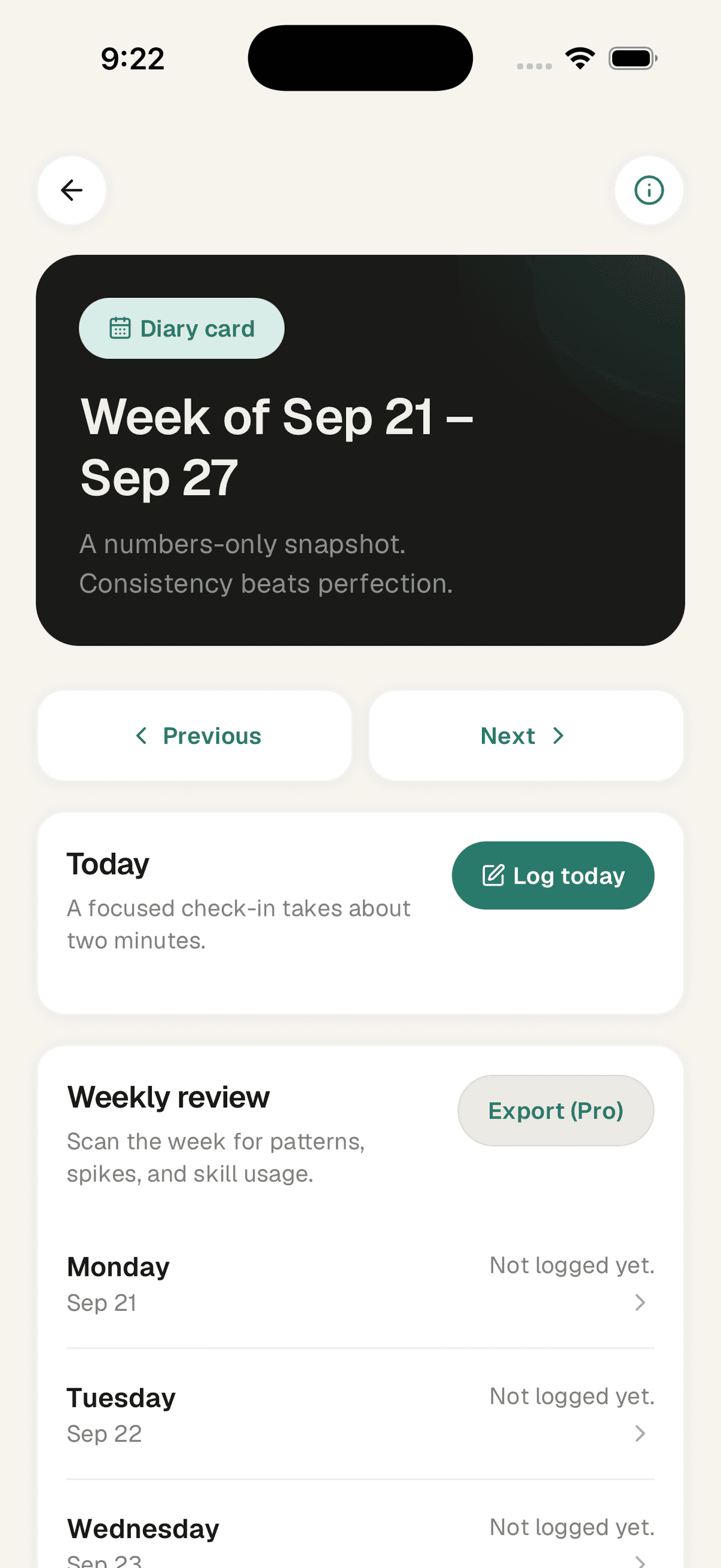
Use a diary-card practice to reflect on intensity, urges, and skills. It is not a crisis tool or a replacement for professional support.
Try a free diary cardThese tools do not treat anxiety or replace care. They can give you a structured way to pause, test the story, and choose one deliberate action instead of reacting at peak intensity.
Start with the skill you need today. Keep the rest of the library nearby for the next hard moment.
No. WithMarsha is educational DBT skills support. It does not provide therapy, diagnosis, treatment planning, or crisis care.
Yes. The skills library includes mindfulness, distress tolerance, emotion regulation, and interpersonal effectiveness.
Yes. It is designed as a between-session practice companion and does not replace guidance from a qualified clinician.
Yes. WithMarsha is available on iOS and Android.