What to track in a diary card app
- Emotions and their intensity.
- Urges, behaviors, and what preceded them.
- Which DBT skills you tried and what helped.
- Brief notes you can bring back into therapy.
A DBT diary card app is a digital record of emotions, urges, skills, and daily patterns between sessions. WithMarsha is available on iOS and Android.
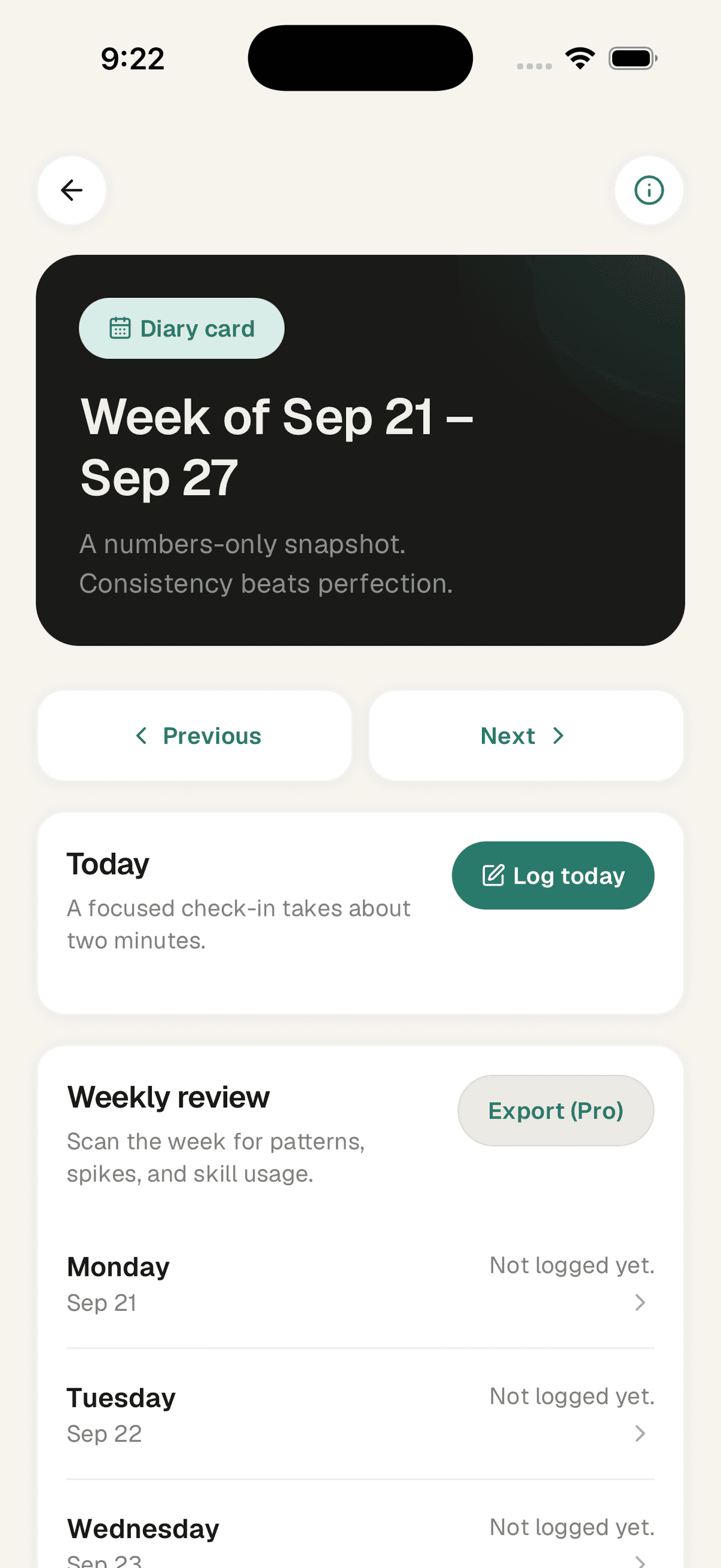
No more paper diary cards
A diary card only works when you can return to it. WithMarsha gives you one simple place to notice what happened, what you tried, and what could help next.
See your patterns over time
Use your card to spot the days that felt harder, the skills you reached for, and the details worth returning to in therapy or self-reflection.
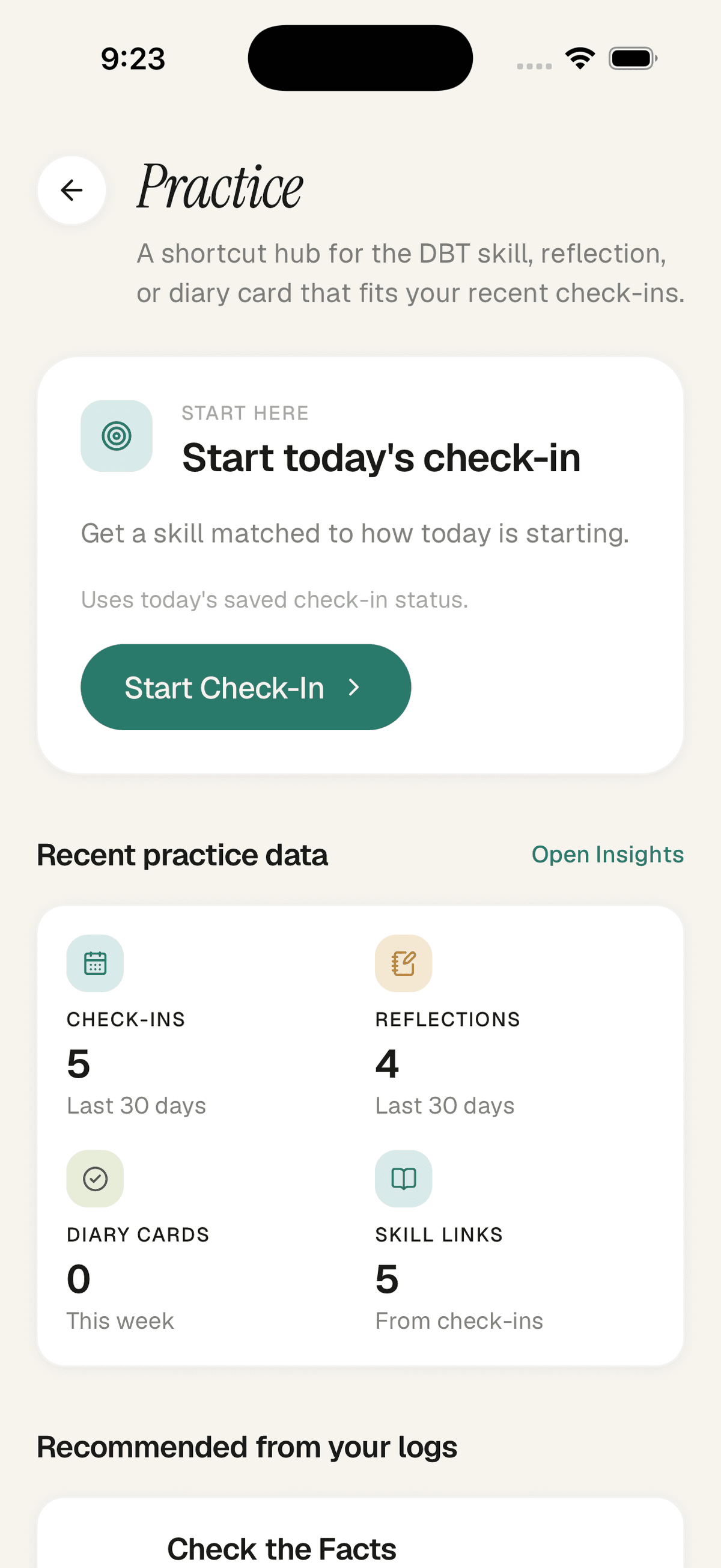
Don't know which skill to use?
A diary card should not leave you alone with the pattern. Move into guided DBT skills and in-the-moment practice when you want help choosing what to try.
Find a DBT skill to tryMore than a diary card
Tracking is more useful when it helps you decide what to practice next. WithMarsha pairs diary-card reflection with a skills library, guided DBT learning, and conversation practice.


Diary-card standard
The clinical value is not the number of boxes you fill. It is whether the card helps you see patterns, practice skills, and bring clearer material into therapy or self-reflection.
DBT research has used diary cards to track skills use across days, which makes the card useful only when it leads to review and next-step practice.
Mobile diary and app-integration research focuses on capturing real-world patterns and transferring skills into daily contexts.
Tracking emotions, urges, behaviors, and skills is most useful when the pattern is reviewed with curiosity rather than self-judgment.
If a diary card tracks self-harm, suicidality, substance use, disordered eating, or violence risk, it should sit inside an appropriate care workflow.
Keep self-guided tracking lightweight. Use qualified care when diary cards involve safety risk, severe symptoms, or target behaviors that need treatment planning.
A DBT diary card app helps you track emotions, urges, target behaviors, and skill use in a structured digital format so patterns are easier to notice and review.
A digital diary card is often easier to keep close in real life, which can improve consistency. Many people still use both digital tracking and paper worksheets depending on the situation.
A DBT diary card usually tracks emotions, urges, target behaviors, skills used, and brief context notes so patterns are easier to review.
Diary cards should be reviewed with a therapist when they involve high-risk behaviors, self-harm urges, suicidality, disordered eating, substance use, or complex treatment targets.