Learn the full skills library
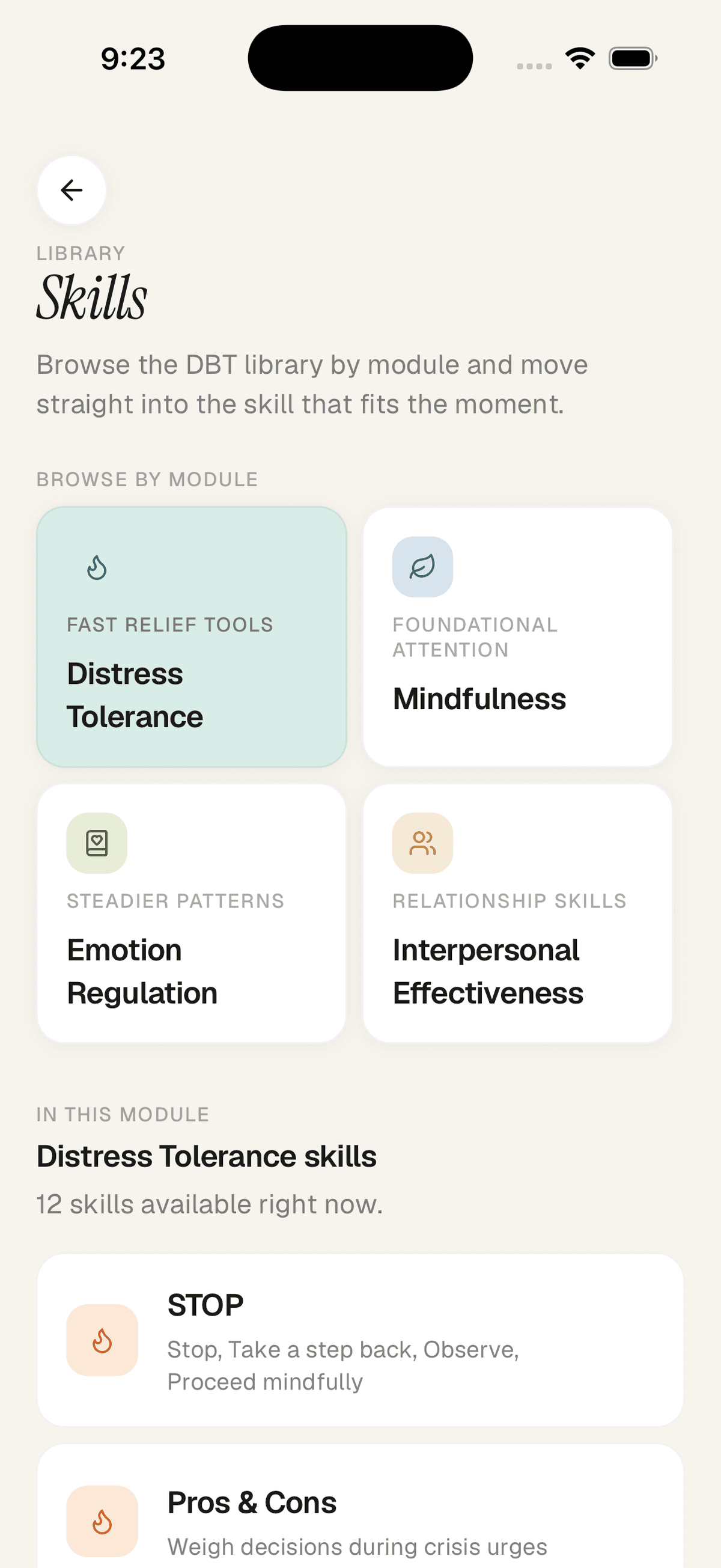
Browse mindfulness, distress tolerance, emotion regulation, and interpersonal effectiveness without losing the thread.
DBT skills for real life
A practical DBT skills library, guided exercises, diary-card practice, and conversation support in one app.


Educational support for iOS and Android. Not therapy, diagnosis, or crisis care.
You do not need to remember every DBT acronym before you can start practicing.
Learning DBT can happen in therapy, group, a workbook, or on your own. The hard part is carrying the skill into the actual moment: the text you want to send, the urge you want to pause, the anxious story that starts to sound like a fact.
WithMarsha is designed as a portable practice space. You can look up a skill, work through a guided exercise, capture a diary-card reflection, or prepare for a conversation. You are not expected to use every feature every day.
A hard moment: choose a named skill instead of searching through notes.
A hard week: use a diary-card reflection to make the pattern easier to review.
A hard conversation: organize the request or boundary before the words are needed.
What you can do
Browse mindfulness, distress tolerance, emotion regulation, and interpersonal effectiveness without losing the thread.
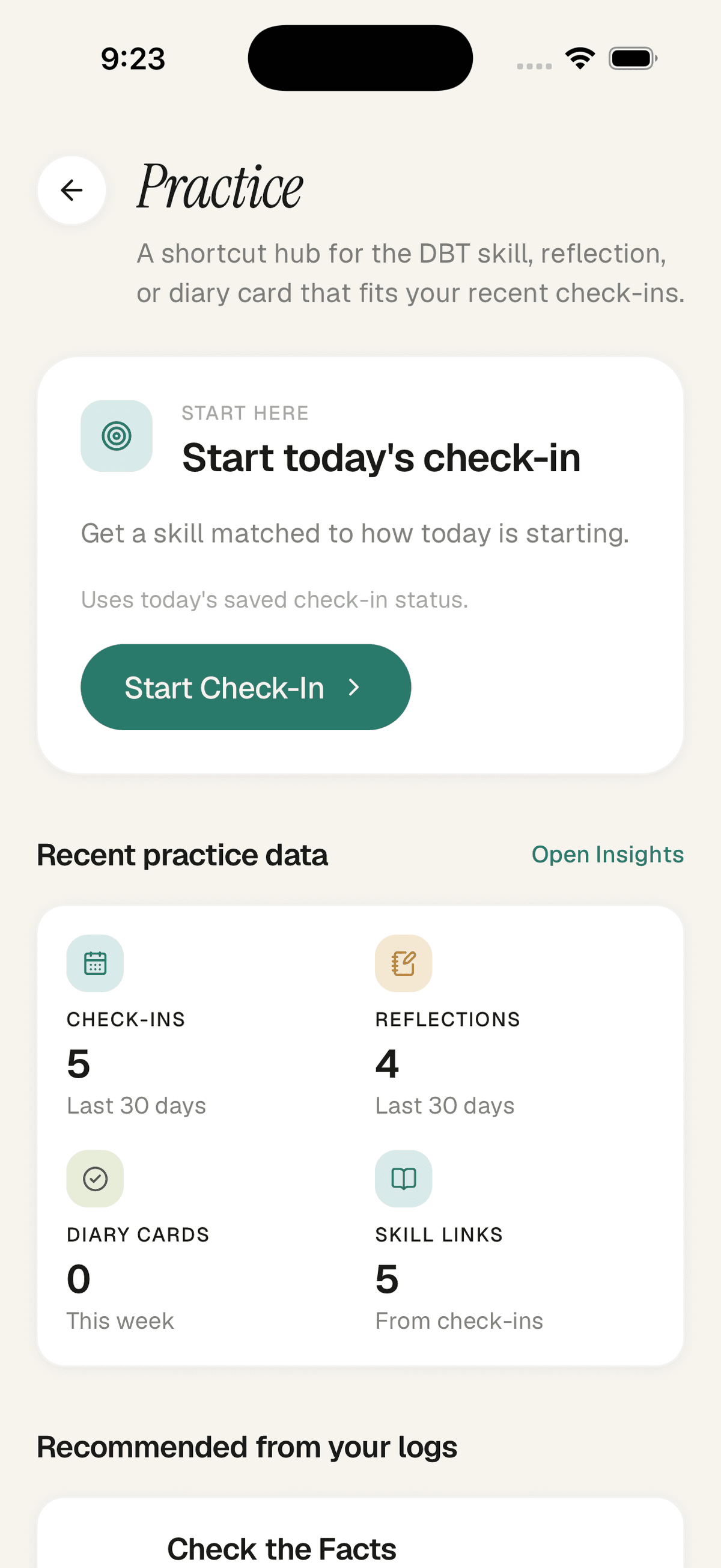
Start from what is happening now and take one structured next step when emotions get loud.
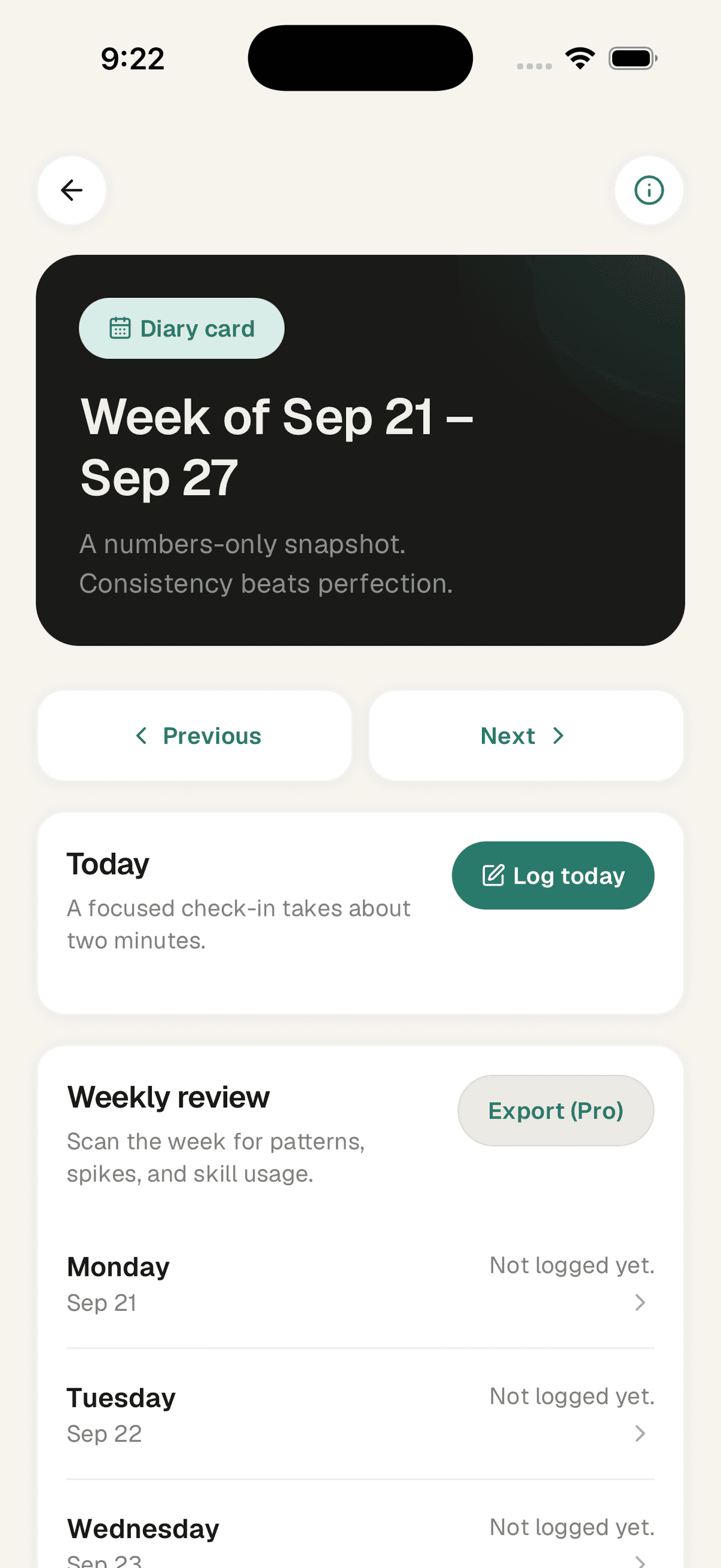
Track the day, notice patterns, and make your reflection useful when you come back to it.
Organize a request or boundary before the actual conversation begins.
Move from reading about a DBT skill to trying it in the context of real life.
More than a daily log
Diary-card practice helps turn a difficult day into something you can review with curiosity, revisit later, or bring into a therapy session.
Use one of these short, private web tools to see the kind of guided practice WithMarsha is built around. Your answers stay in the browser and are not a substitute for professional or crisis support.
Download WithMarsha to keep guided DBT practice and the skills library close when you need them.
No. WithMarsha is educational DBT skills support. It does not replace therapy, diagnosis, treatment planning, or crisis care.
Yes. The skills library includes mindfulness, distress tolerance, emotion regulation, and interpersonal effectiveness.
Yes. WithMarsha is designed to help with between-session practice and does not replace guidance from a qualified clinician.
Yes. WithMarsha is available on iOS and Android.